OEM repair procedures are your vehicle manufacturer’s written instructions defining exactly how a collision repair must be performed. They cover specific welds, cut locations, tolerances, and required system scans. When a shop skips them, your vehicle may look repaired, but no longer perform as designed. At Redeemed Auto Body, we follow OEM procedures for auto collision repair.
Key Takeaways
- OEM procedures define the process: weld types, cut locations, and required post-repair scans, specific to each model.
- Modern vehicles require model-specific methods. High-strength steel, aluminum structures, and active safety systems cannot be repaired based on general assumptions.
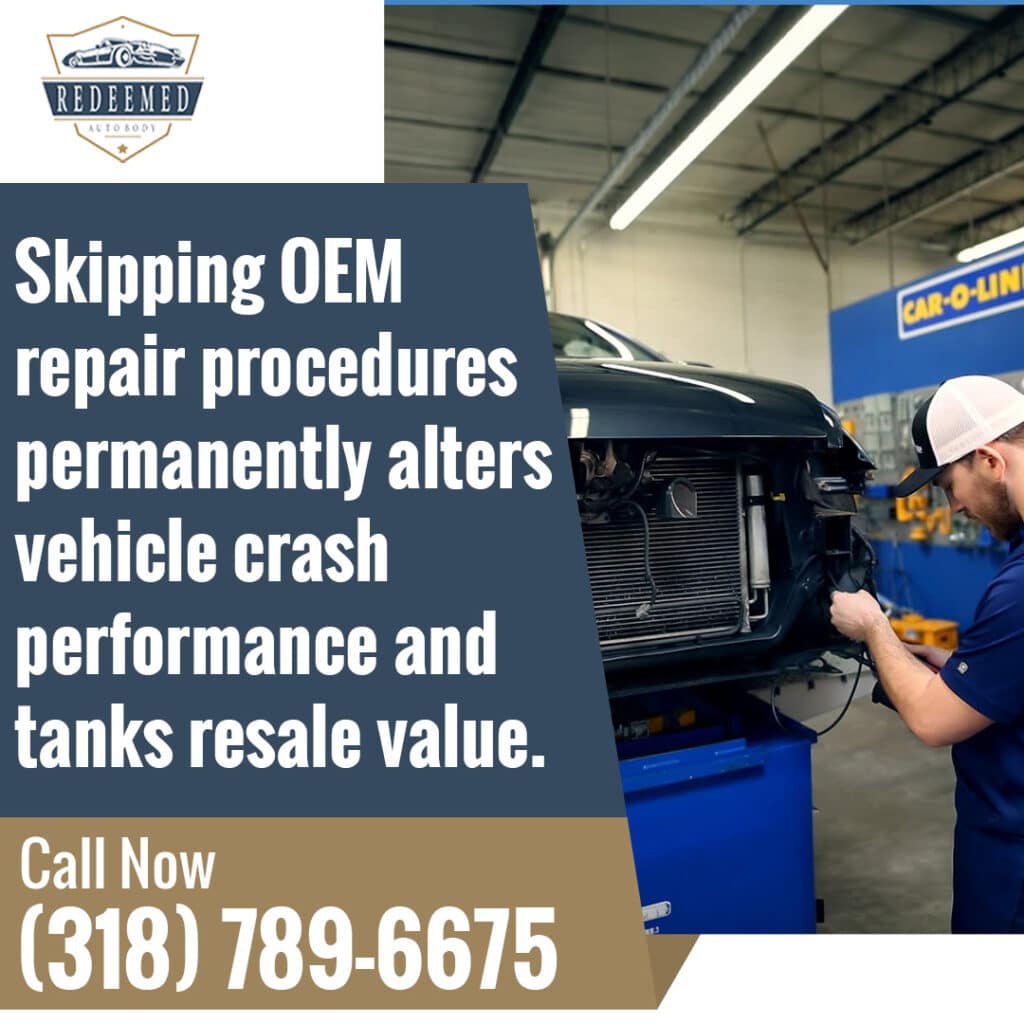
- Skipping procedures creates hidden risk. A repair can look correct while leaving a compromised crumple zone.
What Do OEM Repair Procedures Actually Cover?
OEM repair procedures are model-specific documents that define how a repair must be performed. These include covering welds, cut points, and required system checks before the vehicle leaves the shop.
What a Single Procedure Specifies
Each procedure is written for a specific model year and body configuration. A single document specifies:
- Sectioning locations: where a structural component may be cut, and where it may not
- Joining methods: MIG brazing, spot welding, or structural adhesive, and where each applies
- Measuring requirements: datum points for verifying factory geometry have been restored
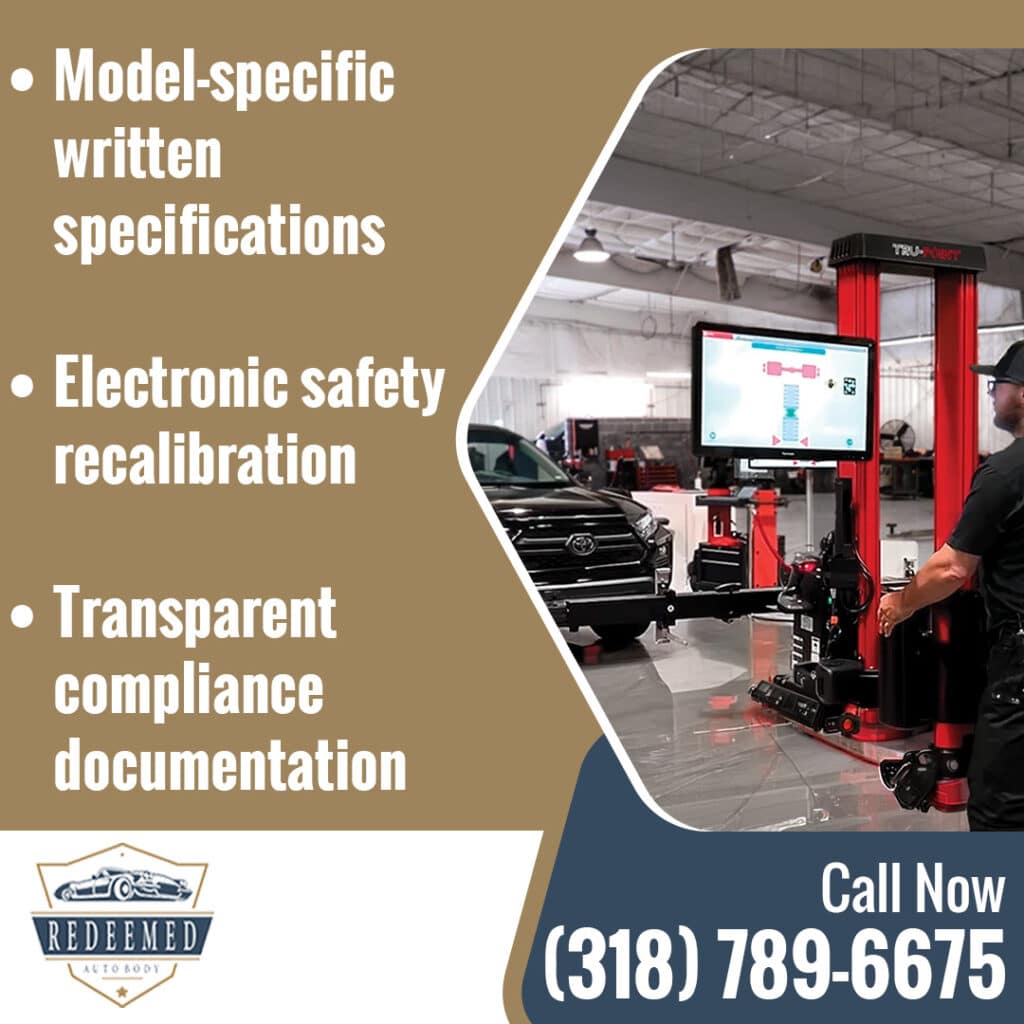
- Pre- and post-repair scanning: which systems require fault code checks before and after the repair
A 2022 vehicle and a 2018 version of the same model can carry entirely different structural requirements.
Why Do Vehicle Manufacturers Publish These Procedures?
Modern vehicles cannot be repaired correctly from experience alone. Only the manufacturer holds the complete engineering specification for how the vehicle was built and how it must be restored.
What Happens When Procedures Are Skipped
Welding high-strength steel requires controlled heat input. The wrong method permanently weakens the joint even when it looks intact. Aluminum requires separate work areas and different joining techniques. These are model-specific engineering requirements that affect how the vehicle absorbs force in a collision.
| Repair Element | Without OEM Procedures | Following OEM Procedures |
| Structural welding | The technician’s judgment on the method | Specified weld type and count per model |
| Panel sectioning | Cut at the end of damage | Cut only at OEM-approved locations |
| Material handling | Standard steel practices | Grade-specific heat and joining protocols |
| Post-repair scanning | Skipped without warning lights | Required for specified systems before delivery |
| Measuring verification | Visual check | 3D measurement at manufacturer datum points |
The Society of Collision Repair Specialists (SCRS) maintains that the collision repair industry must follow any OEM repair procedure specified as required, recommended, or necessary due to damage or safety concerns. We hold SCRS membership, and following published procedures on every repair is non-negotiable for us.
How We Apply OEM Procedures to Every Repair
Before disassembly, we pull manufacturer procedures for each vehicle by model year and build the repair plan from that documentation. Our collision center creates a dedicated Google Drive folder for you with those documents, photos, and repair records.
Our I-CAR Platinum-certified technicians use the Spanesi Touch 3D measuring system to verify structural geometry. We run pre- and post-repair scans on every job using AirPro and Opus diagnostic tools. Our technicians use the AkzoNobel computerized color-matching camera to read your vehicle’s existing paint before mixing, matching the factory color, not an approximation.
Redeemed Auto Body provides collision repair near you in West Monroe, LA, that documents every procedure. We offer free consultations; no obligation.
Frequently Asked Questions
Are OEM repair procedures the same for every vehicle?
No. They vary by model year, trim, and body structure. A 2020 procedure may not apply to a 2023 version of the same model. Each repair requires pulling the correct document for that specific vehicle.
Do OEM procedures affect my vehicle’s warranty?
Many manufacturers tie warranty coverage to OEM-compliant repairs. Deviating may void structural or safety-system warranties. Confirm terms for collision repair services with your dealership or vehicle documentation.
How do I know if a shop uses OEM procedures?
Ask to see them in your repair file. At Redeemed Auto Body, we pull manufacturer procedures before every job and store them in a Google Drive folder available to you at any time, including at resale.
Why Procedures Are Non-Negotiable
Your vehicle deserves to leave our shop restored to the manufacturer’s standard. For collision repair in West Monroe, LA, call (318) 789-6675 or email us at redeemedautobody@gmail.com. At Redeemed Auto Body, we always follow your vehicle manufacturer’s repair procedures to restore your vehicle’s safety, reliability, appearance, function, and value.