
Synopsis
Spring sunlight often reveals paint damage such as swirl marks, scratches, and dull clear coat that formed during winter driving. Learn how paint correction and professional auto body repair services restore vehicle finish, protect long-term value, and help drivers maintain a clean, polished appearance.
Spring arrives in West Monroe, and suddenly, your vehicle tells a different story than it did in winter. The same hood that looked fine in January now shows swirl marks, scratches, and faded patches under bright April sunlight. That’s not a coincidence. Winter driving leaves behind surface damage that low-angle winter light simply doesn’t reveal.
Paint correction and scratch repair restore your vehicle’s finish by removing clear coat defects and repairing more serious damage with color-matched paint without a full repaint when damage is caught early.
At Redeemed Auto Body in West Monroe, LA, we see many vehicles in the spring with paint damage that developed during colder months. Drivers are surprised by what they find once they look closely. We help you understand what you’re seeing, what it means for your vehicle, and when professional auto body repair services are the right call.
Why Spring Sunlight Is the First Signal to Inspect Your Paint
Direct Light Shows What Diffused Light Hides
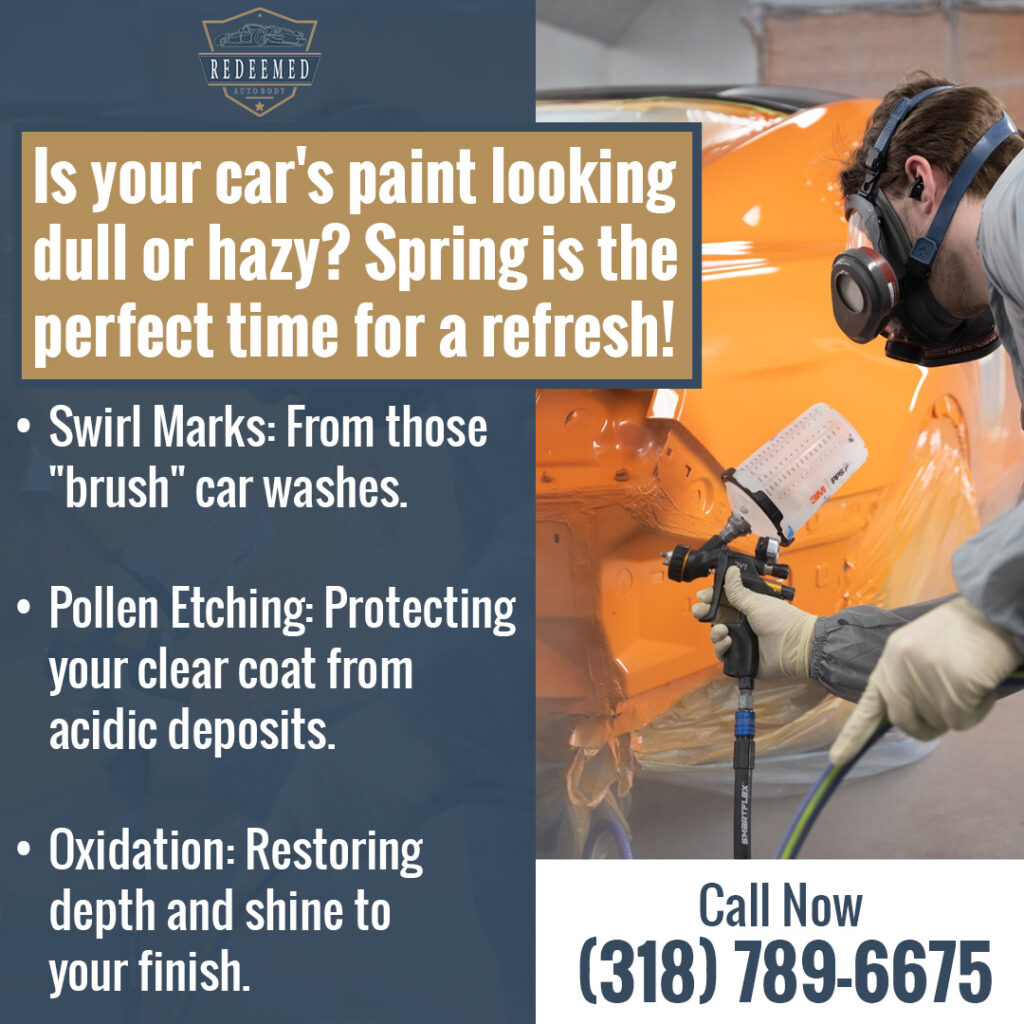
Overcast winter skies scatter light evenly. Spring sun hits surfaces at angles that make every surface imperfection visible. Swirl marks, those faint circular patterns across paint, scatter direct light and create a dull, hazy look across panels that should be glossy.
Many swirl marks may trace back to one source: automated car washes with rotating brush systems. Each pass drags fine grit across your clear coat in circular arcs. The marks are shallow, but they accumulate across an entire season of washing.
Pollen Season Adds Another Layer of Damage
Louisiana springs bring heavy tree pollen. Pollen carries organic acids and holds moisture against your paint surface when it settles. Left on the paint for days, it can etch into the clear coat, leaving dull spots that don’t wash away. Spring is the right window to address pollen-related surface damage before summer heat and humidity drive it deeper.
What Paint Condition Means for Your Vehicle’s Value
Paint condition directly affects what your vehicle is worth at trade-in or private sale. Car buyers are advised to inspect a vehicle’s physical condition carefully before purchase, and dealers assess that condition the same way when making trade-in offers.
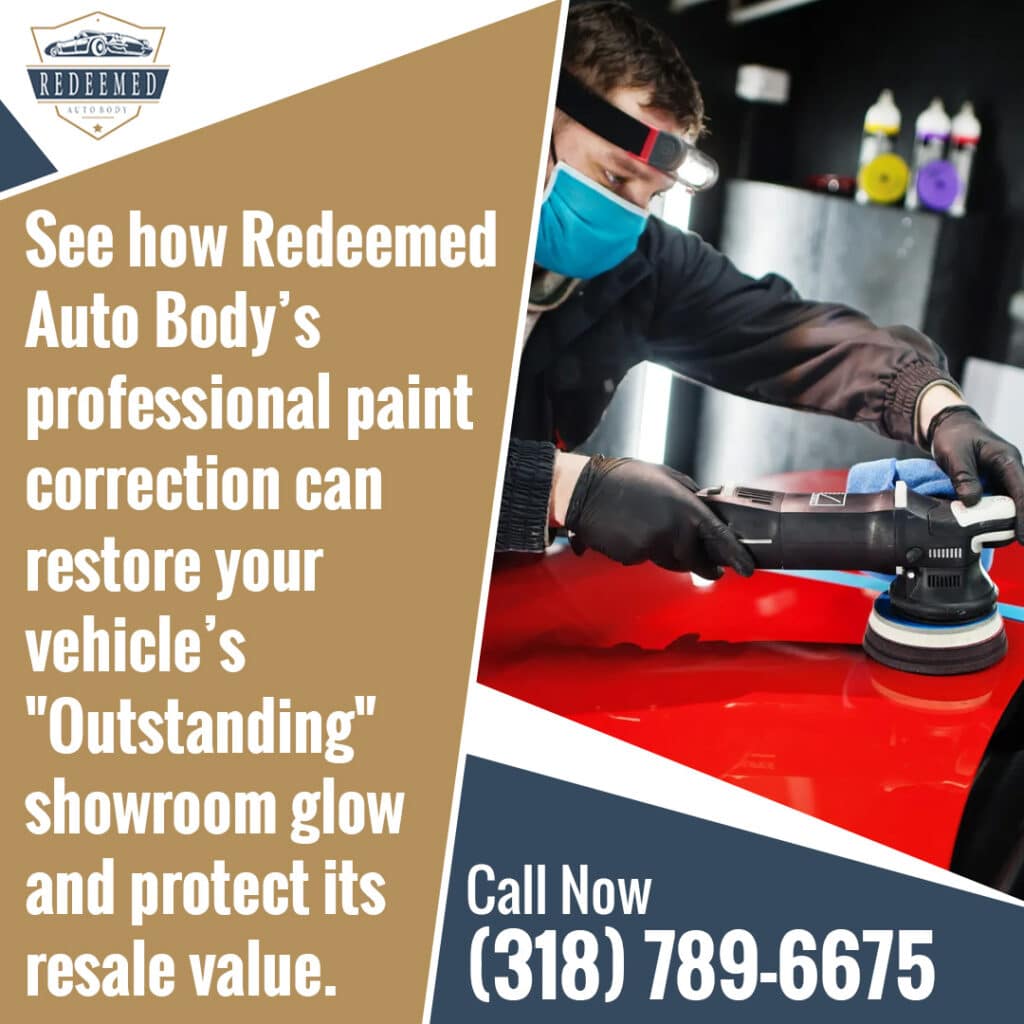
Edmunds, one of the auto industry’s most widely used valuation platforms, uses five condition tiers to price used vehicles. Only approximately 5% of used vehicles qualify as “Outstanding,” defined as no visible wear, glossy paint, and exceptional overall condition. Edmunds sets its trade-in baseline at “Clean” condition. Vehicles rated “Average” where paint shows dullness, scratches, or dings are priced downward from that baseline. That gap shows up directly in what dealers offer.
If you plan to sell or trade in within the next year or two, spring is the practical time to restore your paint before summer heat and humidity push surface damage further.
Understanding Paint Correction: What It Is and What It Fixes
Paint correction is the removal of surface defects from the clear coat layer using machine polishing, not repainting. The clear coat is the topmost transparent layer that protects your paint’s color. When this layer develops swirl marks, light scratches, etching, or oxidation, a skilled technician uses progressively finer polishing compounds to level the surface and restore its clarity.
This is precision work. The clear coat has finite thickness. Removing too much leaves the color coat exposed and vulnerable. Done correctly, paint correction recovers the paint’s depth and gloss without touching the color beneath.
What Paint Correction Addresses
- Swirl marks from brush-based car washes or improper hand washing
- Light surface scratches confined to the clear coat
- Pollen and water etching on the clear coat surface
- Dull, flat paint that has lost gloss without visible scratches
What Paint Correction Cannot Fix
Paint correction is limited to the clear coat. It does not repair scratches that have cut through to the color layer or deeper. Those require paint application, a different service. Misidentifying scratch depth and attempting to polish a paint-layer scratch just wastes time and thins the clear coat further.
We inspect every vehicle thoroughly before any correction work begins. That evaluation tells us how extensive the surface damage is, which correction approach fits, and whether polishing alone will be sufficient or paint repair is needed.
Scratch Depth: The Factor That Determines Your Repair Path
Not every scratch is equal. Depth determines the correct repair: polish, paint, or professional auto body repair.
Clear Coat Scratches
Clear coat scratches sit in the top protective layer and have not reached the color beneath. Run a fingernail across. If it doesn’t catch, damage is surface-level. These look dramatic in sunlight but nearly disappear in shade. Paint correction addresses them.
Color Coat Scratches
These cut through the clear coat into the pigmented layer beneath. The groove appears lighter or a different tone than the surrounding panel. A fingernail catches. Polishing won’t restore the color. Color-matched paint repair is required.
Primer and Bare Metal Scratches
Deep scratches exposing primer or bare metal go beyond cosmetic damage. White, gray, or silver at the scratch base confirms the depth. In Louisiana’s climate, bare metal develops rust fast. These require prompt professional attention: cleaning, priming, paint application, and clear coat restoration.
| Scratch Depth | What You See | Repair Method |
| Clear coat only | Fades in shade; nail doesn’t catch | Paint correction |
| Color coat | Lighter tone; nail catches | Color-matched paint repair |
| Primer exposed | White/gray material visible | Paint repair with primer |
| Bare metal | Silver or rust visible | Professional auto body repair |
Bring your vehicle in before guessing. Polishing a color coat scratch only thins the clear coat and makes the repair harder later.
Reading the Warning Signs on Your Own Vehicle
These are the indicators we tell every customer to watch for:
- Clearly visible swirl marks when you walk around your vehicle in direct sunlight
- Scratches that remain after a careful hand wash
- Dull or chalky patches on horizontal surfaces like the hood, roof, or trunk lid
- A rough texture when you glide a clean hand across the paint surface
- Small chips where a different color or bare metal is showing underneath
Any of these warrants a professional inspection. Drivers searching for autobody repairs near them are often surprised by how much difference early attention makes. The sooner surface damage is caught, the simpler the repair tends to be.
DIY Scratch Kits: Where They Work and Where They Fail
What Store-Bought Kits Can Realistically Do
A consumer polishing kit applied by hand or with a low-speed orbital can reduce very shallow clear coat swirl marks. If scratches are limited to the clear coat surface, a good compound application can improve the look meaningfully.
This is a reasonable step for minor swirling on a daily driver with otherwise healthy paint.
Where DIY Goes Wrong
- Over-polishing removes too much clear coat. Once that layer is gone, it cannot be restored without repainting.
- Wrong compound for the depth, a heavy cutting compound on a light swirl, creates more damage than it removes.
- Touch-up paint without color matching produces a spot that looks worse than the original scratch within weeks, as the touch-up paint fades differently from the surrounding panel.
When to Call a Professional
These situations always require professional auto body repair services:
- Any scratch that a fingernail catches
- Paint damage on panel edges or near body seams
- Vehicles requiring paint application; accurate color matching needs professional computerized tools, not a store-bought touch-up pen, to blend with the surrounding panel
- Chips that are already showing discoloration or rust
Professional repair produces a result you cannot find on the finished vehicle. That standard matters most for drivers who care about resale value and the long-term appearance of their vehicle.
How We Approach Paint Correction and Scratch Repair
Here is our process, step by step:
Pre-Repair Inspection
We evaluate every scratch before recommending a repair method. Paint thickness is measured using a gauge to determine how much clear coat remains on each panel and how aggressive the correction can safely be. This step prevents over-polishing and guides the right approach for each vehicle.
Surface Preparation
The vehicle is pre-washed and fully degreased before any polishing begins. Contaminants left on the surface during polishing cause additional scratches. This step is non-negotiable.
Multi-Stage Polishing
We work through correction stages from heavier cutting compounds to finer finishing polishes. Each stage refines the surface further, removing defects progressively while preserving the remaining clear coat. The number of stages depends on damage severity.
Color-Matched Paint Repair When Required
When scratches reach the color coat or deeper, paint application is part of the repair. Redeemed Auto Body uses the AzkoNobel computerized paint matching camera, part of our AzkoNobel paint system, to identify your vehicle’s exact current color. Paint shifts slightly as it ages. Matching the actual color on your vehicle today, not just the factory code, is what produces repairs that blend into the surrounding finish.
Final Polish and Quality Check
After the paint cures, we polish the repaired area to restore gloss and blend it with adjacent panels. Before we call you for pickup, the vehicle goes through a quality check that includes a visual inspection in direct light, because that’s the same light you’ll see it in when you pick up your keys.
Keeping Your Paint Protected After Repairs
Once your vehicle’s paint is restored, these habits help it stay that way.
How You Wash Matters More Than How Often
Use a microfiber mitt, not a sponge or brush. Rinse the vehicle thoroughly before making contact to remove grit that would otherwise scratch during washing. Avoid drive-through washes with rotating brushes. They’re the single biggest source of swirl marks on regularly maintained vehicles.
Wax or Sealant Adds a Protective Layer
A quality paste wax or paint sealant creates a sacrificial barrier between your clear coat and environmental contaminants. Road grit, pollen, and minor contact affect the wax layer before they reach the paint. Reapply every three to four months for continuous protection.
Handle Small Chips Before Spring Becomes Summer
A chip that exposes bare metal in March can develop surface rust by May in Louisiana’s humidity and heat. Address small chips promptly. A minor repair done early at an auto body shop in West Monroe, LA, costs far less than a rust repair done later.
What Our Customers Say
“Walt Silmon (Owner) was professional and friendly in all communications. My car’s Soul Red Metallic was difficult, causing Redeemed Auto Body to expend unanticipated time, effort, and expense to get it right, but I was not charged beyond their original quote. The repair work was excellent, and the finished product looks great. Their commitment to quality really shows in the final result. If you want a shop that stands behind their work and doesn’t cut corners, even if it takes longer than expected, this is a place I would recommend.” — Google review by Noel.
Frequently Asked Questions
Does insurance cover paint correction or scratch repair?
Coverage depends entirely on how the damage happened. Paint correction for wear, swirl marks, or normal aging is typically not covered. If your paint damage resulted from a specific covered event, such as hail, vandalism, or a collision, your comprehensive or collision policy may apply. We walk through your situation with you during the free consultation so you understand your options before deciding how to proceed.
How long does paint correction take?
A single-stage correction on a standard sedan generally takes three to six hours. Repairs that include paint application take longer, depending on the number of panels affected and the depth of damage. We give you a realistic timeline before any work begins.
Can all scratches be polished out?
No. Polishing only addresses damage within the clear coat. Scratches that reach the color layer or deeper require paint repair. Polishing those actually makes the overall condition worse by thinning the surrounding clear coat without resolving the damage. That’s why we inspect every vehicle before recommending an approach.
Do you follow manufacturer procedures for paint repairs?
Yes, without exception. We pull and follow OEM repair procedures for every job, including paint and body work. Our technicians hold I-CAR Platinum certification, and every repair is documented in a Google Drive file created specifically for your vehicle.
Schedule a Spring Paint Inspection in West Monroe
Spring is the right window. The damage is visible, the repair options are widest, and addressing it now protects your vehicle before summer heat and humidity push surface damage further.
We offer free consultations, follow OEM repair procedures on every job, and back all repair and paint work with a Limited Lifetime Warranty, valid for as long as you own the vehicle. Owner Walt Silmon has spent over 20 years in this industry, starting from the ground up. Every vehicle that comes through our shop gets the same honest, thorough evaluation he would want for his own.
Call (318) 789-6675 or email redeemedautobody@gmail.com to schedule a consultation with an auto body specialist in West Monroe, LA, at Redeemed Auto Body. We will tell you exactly what your paint needs and what it doesn’t, and give you a written estimate before any work begins. Not all body shops are the same.