Synopsis
Cold weather often exposes collision damage that warmer temperatures conceal, as material contraction reveals misalignment, weakened repairs, and stressed components. Recognizing these signs early helps protect vehicle safety, performance, and value, especially after prior accident repairs.
Key Takeaways
- Cold temperatures tighten tolerances and expose hidden collision damage
- Minor past impacts often cause issues revealed in winter
- New noises, gaps, or handling changes signal deeper problems
- Structural misalignment affects safety systems and stability
- OEM-based inspections confirm whether repairs meet factory standards
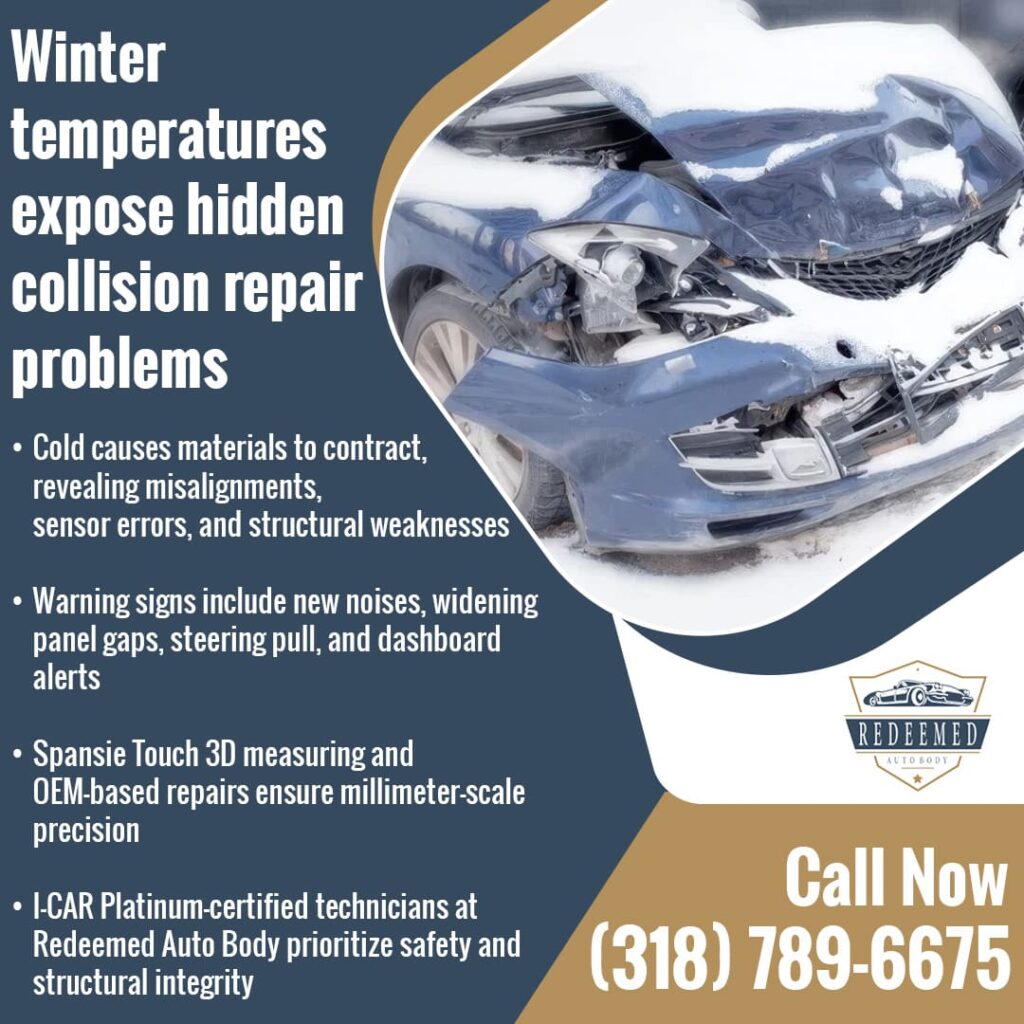
Cold weather has a way of exposing problems that warmer temperatures hide. When temperatures drop, materials contract, tolerances tighten, and stresses placed on your vehicle during a past accident can suddenly show themselves. You may notice new noises, handling changes, or warning lights once colder mornings arrive. These issues often trace back to collision damage that was missed or only partially addressed.
Redeemed Auto Body is a collision center that has been operating in West Monroe, LA, since 2020. We know that hidden damage can be exposed, even during Louisiana’s relatively mild winters. Understanding why cold weather reveals hidden collision damage can help you protect your safety, your vehicle’s performance, and its long-term value.
Why Temperature Drops Affect Previously Repaired Vehicles
Every material in your vehicle responds to temperature changes through expansion and contraction. This natural process creates stress on components, especially those that sustained damage and underwent repairs after an accident.
Metal shrinks when temperatures fall. Structural components contract slightly. Plastics lose their flexibility and become more brittle. Sealants and adhesives harden, potentially losing their bonding strength. When repair work addressed only surface-level damage without restoring structural integrity to factory specifications, these material changes expose the underlying weaknesses.
This effect intensifies at connection points where different materials meet. Vehicles repaired properly account for thermal expansion through precise alignment and manufacturer-specified materials. Shortcuts taken during initial repair work create stress concentrations that winter weather reveals through unusual noises, visible gaps, and handling changes.
How Winter Exposes Hidden Structural Problems
Cold weather functions as a stress test for your vehicle’s structure. When materials contract at varying rates, even slight misalignments become noticeable.
Cold temperatures cause metal vehicle parts to contract, stressing welds, mounts, and joints. This contraction pulls on welds, mounting points, and panel connections. If structural components weren’t restored to manufacturer specifications during repair, this pulling force reveals those discrepancies.
Thermal contraction creates tension throughout your vehicle’s structure. Properly aligned components distribute this tension evenly. Misaligned components from incomplete repairs concentrate stress at specific points, causing creaking sounds, visible panel movement, or changes in how doors and hatches operate.
How Different Materials React to Temperature Changes
| Material Type | Response to Cold | What It Reveals About Repairs |
| Steel frame components | Contracts and stiffens | Misalignment at weld points and mounting brackets becomes apparent |
| Plastic panels and trim | Loses flexibility, becomes brittle | Poor fitment and inadequate fastening shows through |
| Structural adhesives | Hardens and loses elasticity | Bonding failures at panel joints become visible |
| Rubber seals and gaskets | Stiffens and shrinks | Gaps appear where panels don’t align properly |
Temperature-related movement affects not just the repaired area but adjacent components as well. A front-end impact that received surface-level repair may show problems in door alignment, trunk operation, or even rear panel gaps when winter stresses the entire structure.
Common Symptoms That Indicate Missed Damage
Several distinct symptoms appear when lower temperatures expose incomplete repairs. Recognizing these signs helps you address structural problems before they compromise safety.
New Noises That Appear Only in Colder Weather
Sounds that weren’t present during warmer months often signal structural movement:
- Creaking when driving over bumps or uneven surfaces
- Popping sounds during cold starts or initial acceleration
- Rattling from specific areas around the former damage location
- Squeaking from door hinges or panel connection points
These noises occur because improperly repaired connections allow micro-movement between parts. Lower temperatures reduce the cushioning effect of rubber mounts and bushings, making this movement audible. The sounds typically originate from areas near the accident site but can appear in seemingly unrelated locations due to stress transfer through the frame.
Panel Gaps Becoming More Noticeable
Consistent, even gaps between body panels indicate proper structural alignment. When winter causes these gaps to change, it reveals mounting problems:
- Gaps that widen noticeably in colder weather
- Uneven spacing between panels, which was less obvious during warm months
- Doors or trunk lids that suddenly don’t close flush with surrounding panels
- Hood alignment that shifts noticeably with temperature
Temperature contraction should affect all panels uniformly. If gaps change noticeably with the season, the underlying structure holds tension from incomplete repairs. This becomes particularly evident around doors, hoods, and trunk lids, where precise alignment serves both functional and aesthetic purposes.
Handling or Steering Changes on Cold Mornings
Vehicles that pull to one side or require constant steering correction may have suspension mounting points that weren’t restored to specification:
- Pulling left or right when driving on straight roads
- Steering wheel sitting off-center even after alignment
- Different handling feel compared to warmer weather operation
- Vehicle drifting during braking situations
Lower temperatures reduce tolerance in suspension components, making any misalignment more noticeable. Suspension geometry depends on precise mounting locations. Even small deviations from factory specifications alter how weight transfers during braking and cornering, reducing your control when winter driving already presents additional challenges.
Warning Lights or Sensor Issues in Cold Conditions
Modern vehicles depend on sensors mounted throughout the structure. Advanced Driver Assistance Systems require extremely precise sensor positioning:
- Intermittent warning lights that appear only in colder weather
- Lane departure warnings that activate incorrectly
- Adaptive cruise control error messages
- Stability control alerts without an apparent cause
These warnings may appear only during winter because thermal contraction shifts the sensor position just enough to trigger error codes. The problem lies not with the sensor itself. The structural mounting point should have been precisely restored during the original repair.
The Risk of Driving With Undetected Structural Issues
Structural integrity matters throughout the year, but winter conditions make it critical. Reduced traction means your vehicle relies more heavily on proper weight distribution and suspension geometry. Even small structural misalignments affect braking performance and stability.
When frame rails, cross-members, or mounting points sit outside manufacturer specifications, they can’t properly absorb and distribute crash energy in another accident. The crumple zones engineered to protect occupants depend on precise structural geometry. Repairs that didn’t restore this geometry leave you more vulnerable when winter driving increases accident risk.
Long-term consequences include:
- Accelerated tire wear from persistent misalignment
- Reduced fuel efficiency from improper aerodynamics
- Declining resale value and difficult vehicle sales
- Potential safety system failures when you need them most
Vehicles with a documented history of collision and frame damage may be perceived as higher risk by buyers and can sometimes command lower resale values compared to similar vehicles without such a history. Winter symptoms that reveal poor prior repairs become selling obstacles you can’t easily overcome.
How Professional Inspections Identify Temperature-Related Damage
Why Visual Inspections Miss Cold-Weather Problems
Surface checks can’t reveal what’s happening within the structure. Panel gaps may look acceptable during warm weather, but expose problems when temperatures drop. Paint and body filler can hide misalignment that only becomes apparent under thermal stress.
Visual inspections also can’t identify internal damage to crumple zones, mounting brackets, or reinforcement structures. These components determine how your vehicle performs in another accident, yet they remain hidden behind panels and trim pieces.
The Role of Digital Measuring and Diagnostic Scans
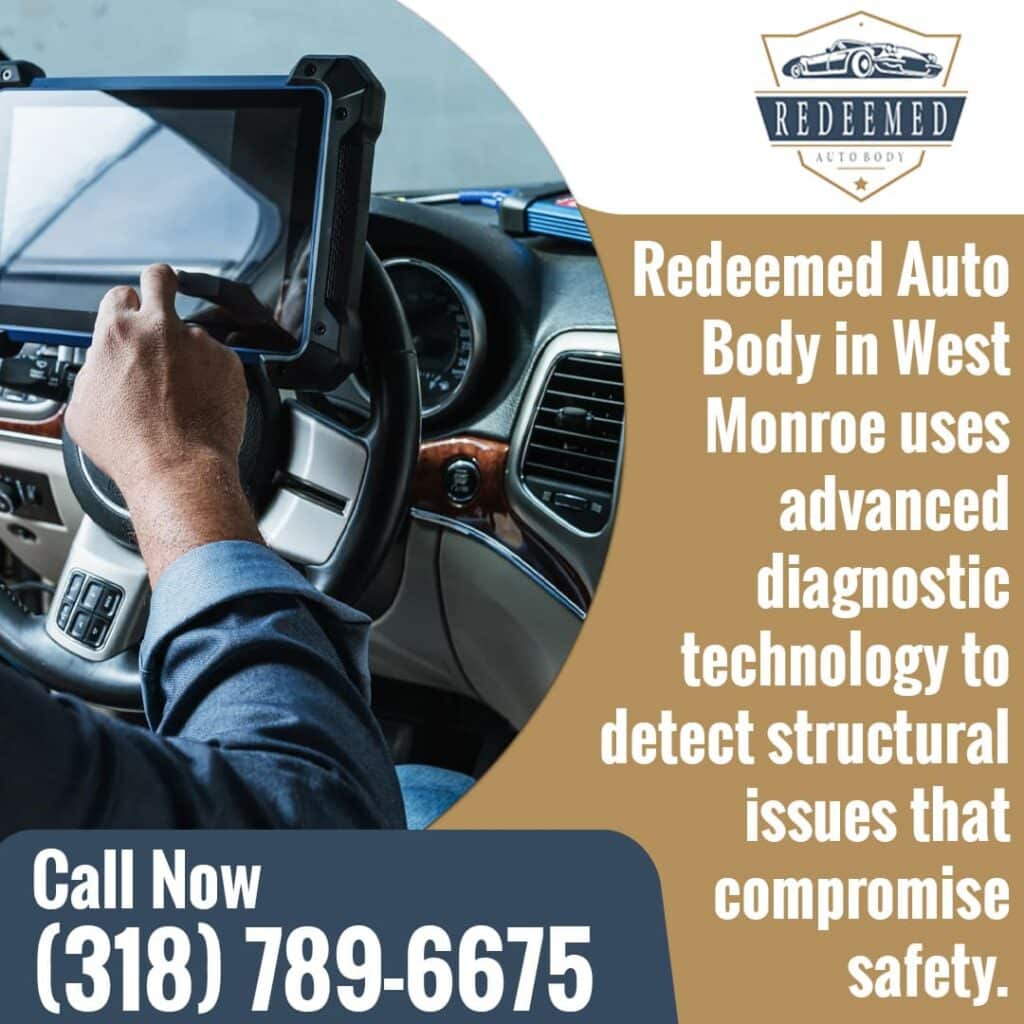
Modern collision repair requires precision measurement. We use advanced 3D frame measuring systems to compare your vehicle’s structure against manufacturer specifications. We also perform professional diagnostics with recognized industry scanning tools that support ADAS recalibration and system checks.
These computerized frame measuring systems identify deviations that visual inspection can’t detect. They reveal whether structural components sit in their designed positions or if prior repairs left misalignments that winter now exposes through symptoms.
Pre-repair and post-repair diagnostic scans check vehicle computers for stored error codes and calibration issues. We use AirPro and Opus diagnostic tools to scan all electronic systems and verify proper function. Many structural problems trigger sensor warnings that may not appear until environmental conditions change. Scanning identifies these issues before they compromise safety.
Comparing Findings to OEM Specifications
Vehicle manufacturers engineer specific tolerances that account for material properties and thermal expansion. Proper auto body work restores these tolerances. Comparing measured dimensions against Original Equipment Manufacturer specifications determines whether your vehicle meets the standards required for safe operation.
This comparison process separates cosmetic acceptability from structural integrity. A vehicle can look perfect while sitting outside factory tolerances for:
- Frame alignment and straightness
- Suspension mounting point locations
- Crumple zone geometry and positioning
- Sensor mounting accuracy
Only measurement against OEM specifications reveals the difference between a vehicle that looks repaired and one that’s actually safe to drive.
Why OEM Repair Procedures Matter More in Temperature Extremes
Manufacturers design vehicles to perform across temperature ranges that include both summer heat and winter lows. OEM repair procedures specify materials, processes, and tolerances that maintain this performance regardless of weather conditions.
Aftermarket repair methods may produce acceptable results under ideal conditions, but often fail when temperature stresses materials. OEM adhesives, for example, maintain bonding strength across temperature extremes. Substitute adhesives may work during installation, but lose effectiveness in colder weather.
How OEM Tolerances Account for Thermal Expansion and Contraction
Original equipment specifications include engineering calculations for thermal movement. Metal expands when heated and contracts when cooled. These dimensional changes are predictable and measurable.
OEM repair procedures specify:
- Exact material grades that match thermal expansion properties
- Precise alignment tolerances that accommodate natural movement
- Specific adhesive formulations tested across temperature ranges
- Welding techniques using equipment like our Prospot MIG and MAG welders that maintain structural flexibility without compromising strength
When auto collision repair follows these procedures, the repaired vehicle behaves like an undamaged one. Temperature changes affect it uniformly. No stress concentrations develop at repair points.
We follow OEM repair procedures for every vehicle at our West Monroe facility. This commitment means using OEM-specified materials, pulling manufacturer repair procedures for your specific vehicle, and verifying results through measurement. We provide complete documentation of all OEM procedures used in your repair. Our goal isn’t just to make your vehicle look repaired. It’s performing repairs that are manufacturer testing validated to work across all operating conditions.
When to Have Your Vehicle Checked During Colder Months
Schedule an inspection at a collision center after the first significant temperature drop of the season. This timing catches issues before they progress and before winter driving conditions make structural problems more dangerous.
Have your vehicle evaluated if you notice:
- Any new noises, handling changes, or warning lights that appear in colder weather
- Panel gaps that seem different from what they did during warmer months
- Steering behavior that changes noticeably in lower temperatures
- Doors or trunk that suddenly fit differently than before
These symptoms indicate something has changed. Professional evaluation determines whether the change affects safety or will lead to progressive damage.
If your vehicle was in any accident during the previous year, schedule a thorough structural inspection. Even seemingly minor accidents can cause damage that milder weather masked. Addressing these issues now prevents progressive damage and maintains your vehicle’s safety systems at full effectiveness.
Before any extended winter travel, verification of structural integrity provides confidence in being safe. The time to discover repair issues is in your home area with access to trusted service providers, not during a holiday trip or business travel in unfamiliar locations.
How We Evaluate Cold-Weather Concerns at Redeemed Auto Body
Our approach to collision repair services starts with a thorough evaluation. We use computerized 3D measuring systems to compare your vehicle’s structure against manufacturer specifications. This process identifies both obvious damage and the subtle misalignments that temperature changes expose.
Diagnostic scanning with AirPro and Opus tools checks every electronic system and sensor. We generate OEM repair plans using manufacturer procedures specific to your vehicle’s make, model, and year. Transparent documentation allows you to see exactly what we found and understand why specific repairs are necessary.
We create a Google Drive folder for each customer containing all repair procedures, measurement reports, and photographic documentation. This transparency helps you make educated decisions about your vehicle repairs. We discuss insurance claims without the pressure of Direct Repair Program relationships that might prioritize insurer preferences over your vehicle’s actual needs.
Our Collision Repair Services Include:
- Free consultations and initial damage assessment
- Computerized structural measurement with Spansie Touch 3D measuring equipment
- Pre-scan and post-scan diagnostics using AirPro and Opus systems
- OEM parts sourcing and factory repair procedures
- Insurance claim assistance and customer advocacy
- Superior color matching using computerized systems for paint correction services
- Hail damage repair
- Lifetime workmanship and paint warranties
- Weekly customer updates throughout the repair process
Our I-CAR Platinum-certified technicians bring decades of combined experience to every repair. Owner Walt Silmon’s 20-year background in the industry started by sweeping floors and progressed through frame straightening and heavy collision work. This helps us understand both the technical requirements and the customer concerns about collision repair in West Monroe, LA.
For services requiring specialized equipment like ADAS recalibration, we coordinate with authorized dealers so that your vehicle’s advanced safety systems function exactly as the manufacturer intended. We maintain proper protocols for all safety-critical systems, partnering with qualified specialists when needed to guarantee correct calibration and operation.
What To Know About Cold Weather and Hidden Damage
Winter doesn’t create new damage. It reveals existing problems that warmer temperatures masked. The symptoms you notice during colder months started with incomplete repairs that didn’t address structural issues properly.
Early professional evaluation prevents safety risks and protects your vehicle’s value. The cost of proper structural inspection is far less than the consequences of driving a vehicle that can’t perform as designed when conditions demand it most.
Structural integrity protects both occupants and investment. Your vehicle represents significant financial value. Proper collision work that follows OEM procedures and verifies structural accuracy preserves that value. With precise auto collision repairs, the safety systems you depend on will function correctly when you need them.
Need a Professional Collision Inspection in West Monroe, LA?
If you’ve noticed any cold-weather changes in how your vehicle sounds, handles, or operates, our team at Redeemed Auto Body can help. Our collision center at 2144 Jonesboro Road serves West Monroe and nearby areas throughout Northeast Louisiana.
Call us at (318) 789-6675 or email us at redeemedautobody@gmail.com to schedule a structural evaluation. We’ll measure your vehicle against manufacturer specifications, perform diagnostic scans, and provide transparent documentation of our findings. You’ll understand exactly what’s happening with your vehicle and what’s needed to restore it to safe, proper condition.
Our commitment to OEM procedures, transparent communication, and customer education means you’ll understand exactly what your vehicle needs and why those repairs matter. We don’t work for insurance companies. We work for you, providing your vehicle with safe, proper repairs that protect both your family and your investment.
Whether you’re searching for collision repair near you or need expert evaluation of existing repair work, our team provides the expertise and equipment necessary for accurate diagnosis and proper restoration. Contact us today for your free consultation and discover why we say “Not All Body Shops Are The Same.“
Recent Posts

What Happens During a Professional Collision Damage Assessment
Top Auto Body Care Resolutions For Vehicle Owners This New Year